Vacuum membrane pressing is widely used in furniture manufacturing to cover shaped and routed components with decorative membrane material.
It is commonly associated with products such as kitchen cabinet shutters, wardrobe doors and decorative MDF panels.
But how does the process actually work?
Understanding the vacuum membrane press working principle can help furniture manufacturers plan production, train operators and identify the factors that affect finished component quality.
What Is the Basic Working Principle?
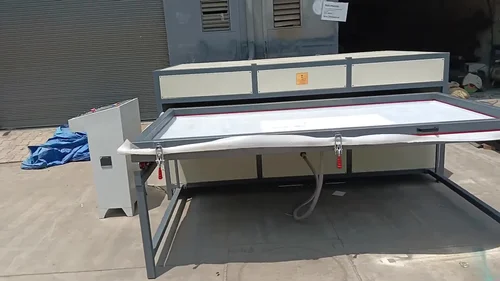
A vacuum membrane press uses heat and vacuum to help a membrane conform to the shape and surface profile of a prepared component.
In a typical process, the component is prepared, adhesive is applied where required, the membrane is positioned, and controlled heating makes the membrane suitable for forming.
Vacuum is then used to draw the membrane around the component.
The exact operating sequence can vary according to the machine, membrane, adhesive and product being manufactured.
Step 1: Preparing the MDF Component
The process starts before the component enters the machine.
MDF shutters or panels may be cut and routed into the required design using suitable woodworking machinery.
The surface should be properly prepared because dust, machining residue or surface defects can affect the final result.
Particular attention may be required around:
- Routed grooves
- Corners
- Edges
- Decorative profiles
- Recessed areas
Good preparation creates a better foundation for the subsequent pressing process.
Step 2: Applying Adhesive
Step 3: Positioning the Components
Step 4: Heating the Membrane
The membrane is heated under controlled conditions.
Heating helps prepare the material to conform to the shapes and profiles underneath it.
Temperature requirements are not universal.
They can vary according to:
- Membrane material
- Membrane thickness
- Adhesive
- Component profile
- Machine configuration
Operators should therefore use settings appropriate to the actual materials and follow relevant manufacturer recommendations.
Step 5: Applying Vacuum
Once the required process conditions are reached, vacuum helps draw the membrane around the components.
This allows the material to follow routed profiles, edges and surface details.
Vacuum performance, membrane characteristics, temperature, component geometry and preparation can all influence the finished result.
Deep profiles and complex designs may require greater attention to process parameters than simple surfaces.
Step 6: Cooling and Unloading
After the pressing stage, the component must reach suitable conditions before it is removed and handled further.
The finished components are then unloaded and inspected.
Operators can check areas such as:
- Corners
- Edges
- Grooves
- Routed profiles
- Surface appearance
- Bonding consistency
Any excess membrane can then be trimmed according to the production process.
What Factors Affect Membrane Pressing Quality?
Successful membrane pressing depends on the complete process rather than one machine setting.
Important factors include component preparation, adhesive application, heating conditions, vacuum performance, membrane properties, component profile and operator consistency.
For this reason, manufacturers introducing a new membrane or component design should establish appropriate processing parameters before moving into regular production.
Where Is Vacuum Membrane Pressing Used?
The process is commonly associated with furniture components such as:
- Modular kitchen shutters
- Wardrobe doors
- Routed MDF doors
- Decorative furniture panels
- Interior furniture components
- Profiled MDF surfaces
Its ability to form decorative membrane over shaped surfaces makes it useful for furniture designs where conventional flat lamination may not be suitable.
FAQs
What does vacuum do in a membrane press?
Why is heating required?
Can membrane pressing be used on routed MDF?
Routed MDF components are a common application of vacuum membrane pressing, subject to suitable material selection and processing conditions.
Conclusion
The vacuum membrane press working principle can be understood as a controlled sequence of component preparation, adhesive application, membrane positioning, heating, vacuum forming and finishing.
Each stage contributes to the final result.
Woodmark provides woodworking machinery for furniture manufacturing applications, including solutions for membrane pressing requirements. Manufacturers should evaluate their component designs, materials and production requirements when planning a membrane pressing process.