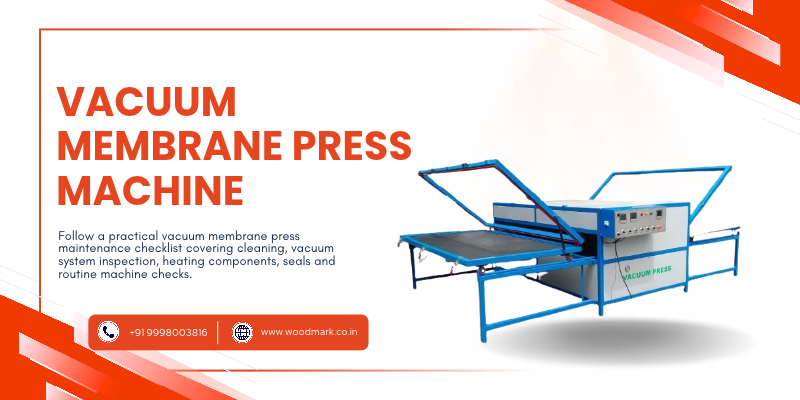
A vacuum membrane press operates with heat, vacuum and multiple mechanical and electrical components. Regular inspection and cleaning can help maintain consistent operation and identify wear before it develops into unexpected downtime.
Instead of waiting for a machine problem, furniture manufacturers can include vacuum membrane press maintenance in their regular production routine.
Here are the key areas operators and maintenance teams should monitor.
Why Is Vacuum Membrane Press Maintenance Important?
Dust, adhesive residue and continuous production can gradually affect machinery.
A preventive maintenance routine can help manufacturers:
- Keep the machine clean
- Identify worn components
- Detect vacuum-system issues
- Maintain consistent operation
- Reduce avoidable production interruptions
- Plan servicing before major problems occur
Maintenance frequency should always follow the machine manufacturer’s recommendations and actual operating conditions.
Daily Maintenance Checks
At the end or beginning of a production shift, operators can visually inspect the machine.
Typical checks may include:
- Clean the working area
- Remove MDF dust and production debris
- Check for adhesive residue
- Inspect accessible vacuum connections
- Look for visible damage or loose components
- Observe unusual machine sounds
- Check whether controls operate normally
Keeping the machine clean also makes developing problems easier to notice.
Check the Vacuum System
The vacuum system is central to membrane pressing.
Operators should watch for changes in normal vacuum performance and inspect accessible hoses, connections, seals and related components according to the machine manual.
Possible warning signs include:
- Longer vacuum build-up
- Unusual pump noise
- Inconsistent forming
- Visible hose damage
- Loose connections
The vacuum pump itself should be serviced according to its specified maintenance schedule.
Inspect Seals and Contact Areas
Sealing components can experience wear during regular machine operation.
Inspect accessible seals for signs of:
- Damage
- Cracking
- Deformation
- Contamination
- Excessive wear
A sealing problem can affect the machine’s ability to maintain appropriate process conditions.
Replacement should use components suitable for the specific machine.
Keep the Heating Area Clean
Heating components should be kept free from unnecessary contamination and inspected according to the manufacturer’s instructions.
Operators should also watch for unusual heating behavior, such as inconsistent operation or unexpected changes in heating time.
Electrical or heating-system repairs should be performed by appropriately qualified personnel.
Clean Adhesive Residue
Inspect Electrical Components Safely
Loose connections, damaged cables and electrical faults can create operational and safety risks.
Routine visual checks may help identify obvious damage, but electrical panels and internal electrical systems should only be inspected or serviced by qualified personnel following appropriate isolation procedures.
Never perform maintenance on energized equipment unless the applicable procedure specifically requires it and is carried out by qualified personnel.
Maintain a Service Record
A simple maintenance record can be surprisingly useful.
Record:
- Inspection date
- Maintenance performed
- Parts replaced
- Observed problems
- Service technician details
- Next scheduled maintenance
Over time, these records can reveal recurring issues and help plan spare-part requirements.
Vacuum Membrane Press Maintenance Checklist
| Maintenance Area | What to Check |
|---|---|
| Machine surface | Dust and residue |
| Working area | Cleanliness and damage |
| Vacuum system | Hoses, connections and performance |
| Seals | Wear or visible damage |
| Heating system | Consistent operation |
| Controls | Normal function |
| Electrical system | Visible damage; qualified inspection |
| Vacuum pump | Manufacturer-specified servicing |
| Moving components | Inspection as specified by manufacturer |
| Maintenance records | Service history and next inspection |
How Often Should Maintenance Be Done?
There is no single maintenance interval suitable for every vacuum membrane press.
Frequency depends on factors such as machine design, daily operating hours, production environment and component specifications.
A practical maintenance plan may include daily operator checks, scheduled inspections and manufacturer-recommended servicing.
The machine’s operating and maintenance manual should remain the primary reference for specific procedures and intervals.
FAQs
How often should a vacuum membrane press be cleaned?
What should I check if vacuum performance decreases?
Does a vacuum pump require maintenance?
Conclusion
Regular vacuum membrane press maintenance is easier to manage when it becomes part of the production routine rather than something performed only after a breakdown.
Cleaning, vacuum-system inspection, seal checks, heating-system observation and scheduled servicing can help maintain reliable machine operation.
Operators should perform only appropriate routine checks, while electrical repairs and specialized maintenance should be handled by qualified personnel according to the machine manufacturer’s instructions.