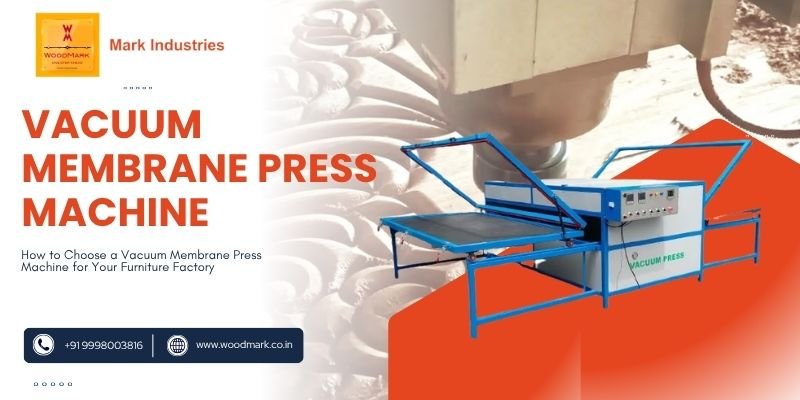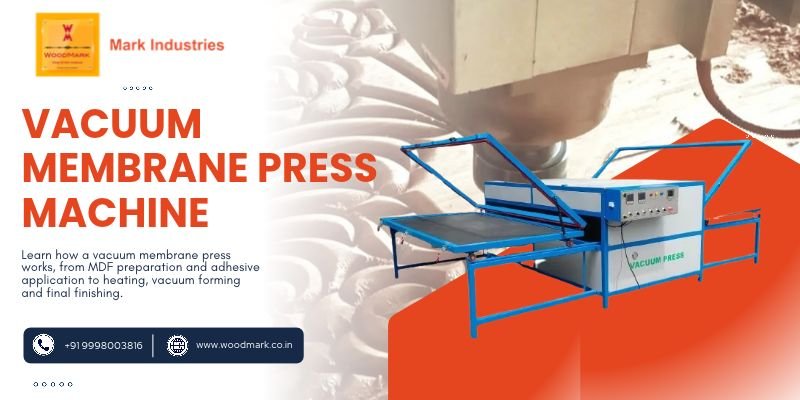
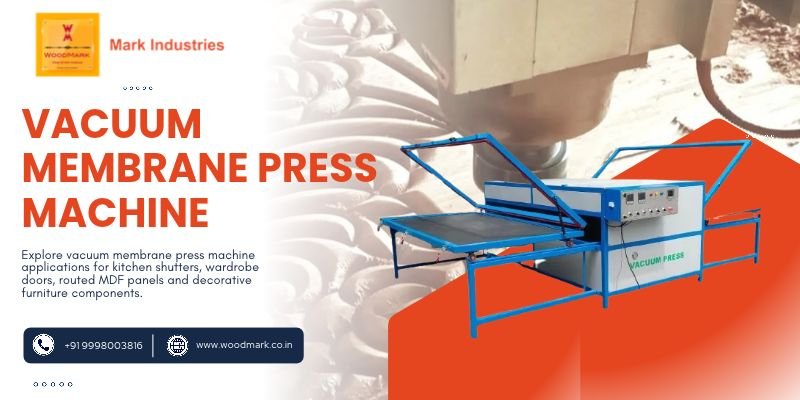
Modern furniture manufacturing involves much more than producing simple flat panels. Kitchen shutters, wardrobe doors and decorative furniture components often include routed patterns, curved edges, grooves and detailed profiles.
A vacuum membrane press machine helps manufacturers apply decorative membrane material over these shaped surfaces.
Here are some of the most common vacuum membrane press machine applications in furniture production.
1. Modular Kitchen Shutters
Kitchen shutters are one of the common applications for membrane pressing.
MDF can first be cut and routed into the required door design. After appropriate surface and adhesive preparation, membrane pressing allows decorative material to conform around the face, edges and routed areas of the component.
This process can be used for various kitchen shutter designs, from relatively simple profiles to more decorative patterns.
2. Wardrobe Doors
Wardrobe manufacturing often requires larger decorative panels with consistent surface finishes.
Vacuum membrane pressing can be used for suitable MDF wardrobe doors with routed or shaped designs.
Manufacturers can produce different door styles while using a similar underlying production process, subject to the requirements of the selected membrane, adhesive and component.
3. Routed MDF Panels
A flat lamination process may not be suitable when an MDF component contains grooves, profiles or recessed designs.
Vacuum membrane pressing allows the membrane to form around appropriately designed routed surfaces.
This makes routed MDF panels an important application for manufacturers producing decorative furniture components.
4. Decorative Furniture Doors
Furniture doors can include various design features such as raised areas, recessed sections and edge profiles.
The combination of controlled heating and vacuum helps suitable membrane material conform to these shapes.
This provides furniture manufacturers with another production method for creating decorative surfaces without restricting every component to a flat design.
5. TV Unit and Storage Components
Modern TV units and storage furniture often use decorative shutters and panels to create a coordinated interior appearance.
Membrane-pressed MDF components may be incorporated into:
- TV unit shutters
- Storage cabinet doors
- Wall-mounted cabinets
- Decorative storage panels
- Entertainment furniture
The exact manufacturing method should be selected according to the component design and material requirements.
6. Office Furniture Components
Membrane pressing can also be considered for suitable decorative components used in office furniture.
Applications may include cabinet fronts, storage shutters and other profiled MDF parts where a formed decorative surface is required.
Production requirements will depend on component dimensions, design and expected volume.
7. Custom Interior Furniture
Custom furniture manufacturers frequently handle changing designs and relatively varied production requirements.
A vacuum membrane press can support the production of suitable decorative MDF components for customized interiors, provided the machine’s working area and process capabilities match the intended parts.
This can include components for residential, commercial and interior-fit-out projects.
Why Is Membrane Pressing Used for Routed Components?
The key advantage of the process is its ability to apply suitable membrane material over more than just a flat surface.
With appropriate component design and processing conditions, the membrane can conform around:
- Edges
- Grooves
- Routed patterns
- Recessed sections
- Decorative profiles
This is why vacuum membrane pressing is closely associated with decorative MDF furniture production.
What Should Manufacturers Check Before Production?
Not every component should automatically be processed using identical settings.
Manufacturers should evaluate:
Component size: The component must fit within the usable working area of the machine.
Profile design: Deep or complex profiles may have different processing requirements.
Membrane: The selected membrane should be suitable for the intended application and process.
Adhesive: Adhesive compatibility and application conditions should be considered.
Production volume: Machine capacity should correspond with expected factory output.
Testing representative materials and components can help establish appropriate production parameters.
Vacuum Membrane Press Applications at a Glance
| Furniture Application | Typical Component |
|---|---|
| Modular Kitchen | Cabinet shutters |
| Wardrobe | Wardrobe doors |
| Residential Furniture | Decorative shutters |
| Storage Furniture | Cabinet fronts |
| TV Units | Decorative panels |
| Office Furniture | Storage shutters |
| Interior Projects | Custom routed MDF components |
FAQs
What products can be made using a vacuum membrane press?
Is a vacuum membrane press suitable for routed MDF?
Can one machine be used for different furniture components?
Potentially, yes. Suitability depends on component dimensions, profiles, materials and the usable working area and capabilities of the machine.
Conclusion
The main vacuum membrane press machine applications are found in decorative furniture manufacturing, particularly where MDF components contain routed designs, profiles or shaped surfaces.
Kitchen shutters, wardrobe doors, cabinet fronts and decorative MDF panels are some common examples.
For manufacturers planning membrane-based furniture production, Woodmark offers woodworking machinery solutions for different production requirements. Component dimensions, materials, design and expected production capacity should be considered when selecting the appropriate machine.