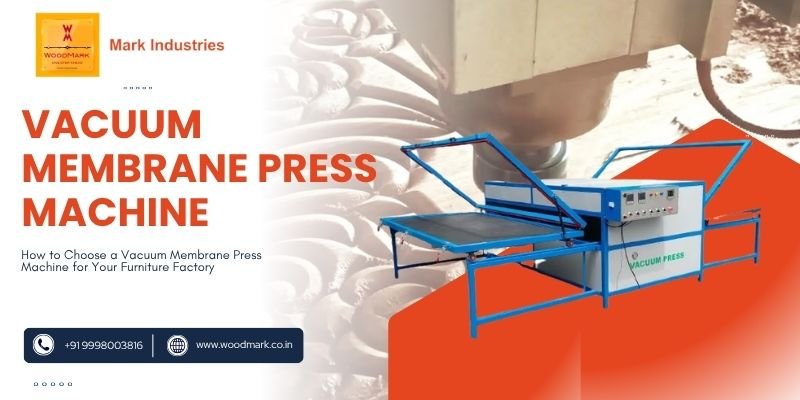
Choosing a vacuum membrane press machine is an important investment for furniture manufacturers producing membrane doors, decorative panels, cabinet shutters and other laminated MDF components. The right machine can help maintain consistent pressing quality, improve production efficiency and reduce problems such as poor adhesion, wrinkles and uneven forming.
However, comparing machines only by price can lead to the wrong purchase.
Working area, heating method, vacuum performance, material compatibility, production volume, electrical requirements and service support all need to be considered before selecting a machine.
This guide explains how to choose a vacuum membrane press machine based on practical production requirements rather than simply comparing machine specifications on paper.
What Is a Vacuum Membrane Press Machine?
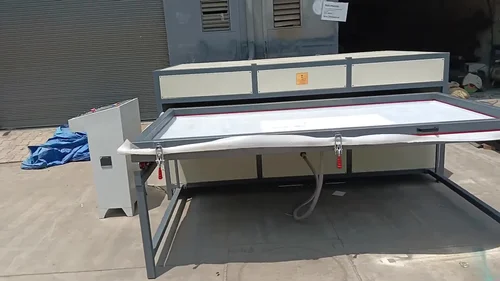
A vacuum membrane press machine is used to apply decorative films or membranes over shaped components using a combination of heat and vacuum pressure.
In furniture manufacturing, it is commonly used for components made from MDF and similar engineered boards. The process is particularly useful when the workpiece has routed profiles, grooves or three-dimensional surface details that cannot be laminated as easily with conventional flat pressing methods.
Typical applications include:
- Kitchen cabinet shutters
- Wardrobe doors
- Decorative MDF panels
- Modular furniture components
- Routed furniture doors
- Interior decorative panels
- PVC membrane laminated components
The exact applications a machine can handle depend on its design, heating system, usable working area and process capabilities.
1. Start With the Products You Want to Manufacture
Before comparing machine models, define what you actually intend to produce.
For example, a manufacturer producing kitchen cabinet shutters may have different requirements from a factory producing large decorative wall panels.
Consider:
Component dimensions: What are the maximum length and width of the components you expect to press?
Component profile: Are you working primarily with flat surfaces, shallow routed designs or deeper three-dimensional profiles?
Production mix: Will you repeatedly manufacture similar doors, or will every production batch contain different sizes and designs?
Material: Which board, adhesive and decorative membrane will be used?
Starting with the finished product makes it easier to determine the machine specifications you genuinely need.
2. Check the Usable Working Size
Working size is one of the first specifications buyers tend to compare, but the largest available machine is not automatically the best choice.
The useful question is:
How much usable pressing area does your production actually require?
A larger working area may allow several smaller components to be processed together, depending on their dimensions and the machine’s operating method.
Before purchasing, prepare a list of your most frequently manufactured component sizes and calculate how they can be arranged within the machine’s usable area.
This gives you a much better indication of practical capacity than machine dimensions alone.
Don’t confuse overall size with usable area
The external dimensions of the machine and its actual working area are different measurements.
Always confirm the usable pressing dimensions with the manufacturer.
3. Evaluate the Heating System
Heat plays an important role in membrane-forming applications because the decorative material needs to reach suitable processing conditions before it can conform to the workpiece.
When evaluating a machine, ask how heat is distributed throughout the working area.
Poor temperature uniformity can potentially contribute to inconsistent results, particularly when multiple components are processed simultaneously.
Important questions include:
- What type of heating system is used?
- How is temperature controlled?
- Is temperature adjustable for different materials?
- How evenly is heat distributed?
- How quickly does the machine reach the required operating temperature?
- What controls are provided to the operator?
The correct temperature setting will depend on the membrane, adhesive, component design and recommended processing conditions.
4. Examine Vacuum Performance
The vacuum system is another critical area to evaluate.
During the pressing process, vacuum helps the heated membrane conform to the surface and contours of the workpiece.
Instead of looking at one specification in isolation, understand the complete vacuum arrangement.
Ask the supplier about the vacuum pump, achievable operating vacuum, evacuation characteristics, maintenance requirements and how the system behaves during a normal production cycle.
For routed MDF components, reliable vacuum performance becomes particularly important around profiles, corners and recessed areas.
5. Check Membrane and Material Compatibility
A machine should be selected around the materials you intend to process.
Do not assume every membrane will behave identically under the same temperature, time and vacuum settings.
Before finalizing your purchase, discuss your intended materials with the machinery manufacturer and your membrane or adhesive supplier.
Provide details such as:
- Membrane type
- Membrane thickness
- MDF or board specification
- Adhesive system
- Component dimensions
- Profile depth
- Surface design
- Expected production volume
Whenever practical, conducting trials with your actual materials and representative components can provide much more useful information than evaluating a machine from specifications alone.
6. Match the Machine to Your Production Capacity
A machine should be selected around the materials you intend to process.
Do not assume every membrane will behave identically under the same temperature, time and vacuum settings.
Before finalizing your purchase, discuss your intended materials with the machinery manufacturer and your membrane or adhesive supplier.
Provide details such as:
- Membrane type
- Membrane thickness
- MDF or board specification
- Adhesive system
- Component dimensions
- Profile depth
- Surface design
- Expected production volume
Whenever practical, conducting trials with your actual materials and representative components can provide much more useful information than evaluating a machine from specifications alone.
7. Consider Your Component Profiles
Not every furniture component has the same forming difficulty.
A simple panel with shallow routing can behave differently from a component with deep recesses, tight corners or complex profiles.
If your factory produces decorative routed shutters, take representative samples or drawings when discussing the machine with the supplier.
This allows the supplier to understand the actual application rather than recommending equipment based only on panel dimensions.
For a high-value machinery purchase, a trial using representative components can be particularly useful.
8. Evaluate Machine Controls and Operator Usability
A technically capable machine still needs to be practical for everyday factory operation.
Look at how easily operators can set and monitor parameters such as temperature and process timing.
Controls should be understandable, accessible and suitable for your production environment.
Also ask what happens when a production parameter needs to be adjusted for a different membrane or component.
Easy, repeatable settings can be valuable when factories regularly switch between products.
9. Check Electrical and Installation Requirements
This part is easy to overlook until the machine reaches the factory. 
Before ordering, confirm:
- Connected electrical load
- Required voltage and phase
- Installation space
- Machine dimensions
- Access required for loading/unloading
- Ventilation requirements, where applicable
- Foundation or floor requirements
- Recommended clearances
- Any supporting equipment required
Your facility should be assessed by appropriately qualified personnel for electrical and installation requirements.
Planning these details before delivery can make commissioning significantly smoother.
10. Look Beyond the Purchase Price
Machine price matters, but purchase price alone does not represent the complete cost of ownership.
Consider:
Energy consumption: What are the machine’s electrical requirements during operation?
Maintenance: Which components require routine inspection or replacement?
Consumables: Are there membranes, seals or other operating items associated with the system?
Downtime: How easily can commonly required spare parts be obtained?
Training: Will operators receive guidance on machine operation?
Technical support: What support is available after installation?
A lower initial price can become less attractive if maintenance, downtime or production limitations become expensive later.
11. Ask About Service and Spare Parts
After-sales support is especially important for production machinery.
Before choosing a supplier, ask:
- Is installation support available?
- Is operator training provided?
- What warranty terms apply?
- Which spare parts are normally kept available?
- How is technical support provided?
- What maintenance does the manufacturer recommend?
These questions help you evaluate the complete machinery partnership rather than only the equipment quotation.
12. Request a Trial Before Finalizing the Machine
When possible, test the machine using materials close to those used in your actual production.
A useful trial might include your:
MDF component + routed profile + adhesive + membrane
Observe the finished component carefully.
Look at the surface, edges, corners, recessed areas and overall consistency.
A production-representative trial can answer questions that a brochure cannot.
Vacuum Membrane Press Machine Buying Checklist
Before requesting a final quotation, prepare this information:
| Requirement | Information to Prepare |
|---|---|
| Product | Cabinet shutter, wardrobe door, decorative panel, etc. |
| Maximum component size | Length × width × thickness |
| Board material | MDF or other substrate |
| Surface profile | Flat, routed, grooved or deep profile |
| Membrane | Type and thickness |
| Adhesive | Intended adhesive system |
| Production | Expected pieces per shift/day |
| Electricity | Available voltage, phase and load |
| Factory space | Available machine and operating area |
| Automation | Required operating/control level |
| Support | Installation, training and spare parts requirements |
Questions to Ask a Vacuum Membrane Press Machine Manufacturer
Before placing an order, ask the manufacturer:
- What is the actual usable working area?
- What heating technology does the machine use?
- How is temperature controlled?
- What vacuum system is provided?
- Which membrane materials can be processed?
- Can my own MDF components and membrane be tested?
- What are the electrical requirements?
- What routine maintenance is required?
- Which spare parts should be kept in stock?
- What installation and operator training are available?
- What warranty is provided?
- What factors determine practical production capacity?
These questions make quotations easier to compare on actual production requirements rather than price alone.
Final Thoughts
The best way to choose a vacuum membrane press machine is to begin with your production requirements rather than the machine catalogue.
Define what you manufacture, component dimensions, profiles, materials and expected daily output. Then compare machines based on working area, heating, vacuum performance, controls, installation requirements, service and practical production capability.
For furniture manufacturers planning a new production line or expanding an existing facility, Mark Industries can help evaluate vacuum membrane pressing requirements based on the intended application and production needs.
Before requesting a quotation, prepare your component dimensions, membrane details, expected production volume and available factory space. This gives the machinery supplier enough information to discuss a more suitable configuration for your application.