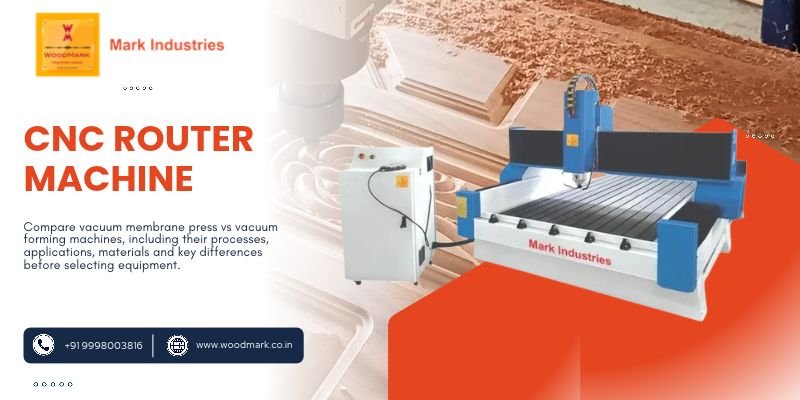
CNC routers have become an important part of modern furniture production because they can perform repeatable cutting and machining operations from programmed designs.
From MDF cabinet components to decorative routed shutters, CNC router applications in furniture manufacturing cover many stages of panel and component production.
Here are some of the common applications manufacturers should understand.
1. MDF Cutting
2. Decorative Routing
Decorative routing is an important CNC application for furniture doors and panels.
A programmed design can be used to create:
- Grooves
- Patterns
- Recessed designs
- Door profiles
- Decorative features
This makes CNC routing useful for manufacturers producing designed MDF shutters and interior furniture components.
3. Kitchen Cabinet Components
4. Wardrobe Components
5. Grooving and Slotting
6. MDF Shutters for Membrane Pressing
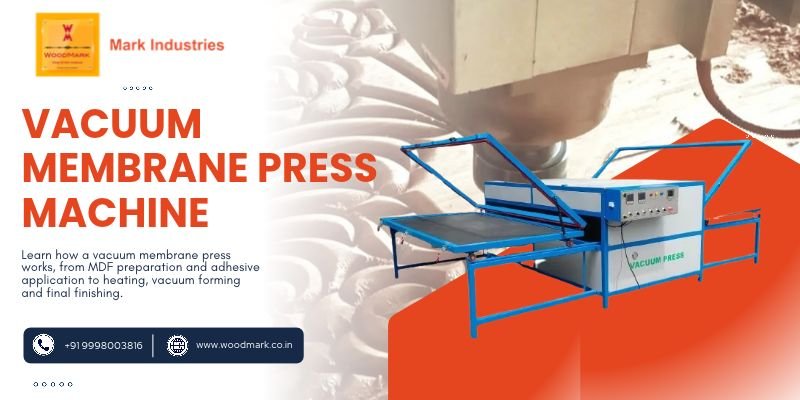
CNC routing and vacuum membrane pressing can work together in an MDF shutter production line.
A typical workflow may look like:
MDF panel → CNC routing → Surface preparation → Adhesive application → Vacuum membrane pressing → Finishing
The CNC router creates the required decorative profile, while the membrane pressing stage applies the suitable decorative surface.
This is one example of how different woodworking machines can form part of the same production workflow.
7. Decorative Wall and Interior Panels
CNC routers can also be used to produce suitable decorative panels for interior applications.
Programmed patterns can help manufacturers create repeatable designs across multiple panels.
Possible applications include decorative furniture panels, wall features and other routed interior components.
8. Custom Furniture Components
CNC Router Applications at a Glance
| Application | Typical CNC Operation |
|---|---|
| MDF Components | Cutting and routing |
| Kitchen Furniture | Component machining |
| Wardrobes | Panel and shutter machining |
| Decorative Doors | Profile routing |
| Cabinet Parts | Cutting, grooves and machining |
| Decorative Panels | Pattern routing |
| Membrane Shutters | MDF profile preparation |
| Custom Furniture | Drawing-based machining |
Why Is CNC Useful for Repeat Production?
Once a suitable design and machining program have been prepared, the same machining path can be repeated for additional components.
This can help manufacturers maintain dimensional consistency across batches.
However, repeatability still depends on factors such as:
- Machine condition
- Tool condition
- Material consistency
- Workholding
- Program accuracy
- Correct operating parameters
CNC automation does not eliminate the need for proper production control.
What Materials Can a Woodworking CNC Router Process?
Material capability depends on the machine and tooling.
Furniture-production applications commonly involve engineered wood products such as MDF and plywood, subject to appropriate machine configuration and cutting tools.
Before machining a new material, manufacturers should confirm its suitability and required tooling with the machine and tooling suppliers.
FAQs
What is a CNC router used for in furniture manufacturing?
Can a CNC router make MDF cabinet shutters?
Can CNC routers produce custom furniture parts?
Is a CNC router only used for cutting?
No. Depending on machine configuration and tooling, CNC routers can perform operations such as routing, grooving and other programmed machining tasks in addition to cutting.
Conclusion
CNC router applications in furniture manufacturing extend from basic MDF component cutting to decorative routing, cabinet production, wardrobe components and custom furniture parts.
The right application depends on the material, tooling, machine configuration and production requirements.
For furniture manufacturers planning CNC-based production, it is useful to identify the exact components and operations first. This makes it easier to select machinery and build an efficient woodworking production workflow.