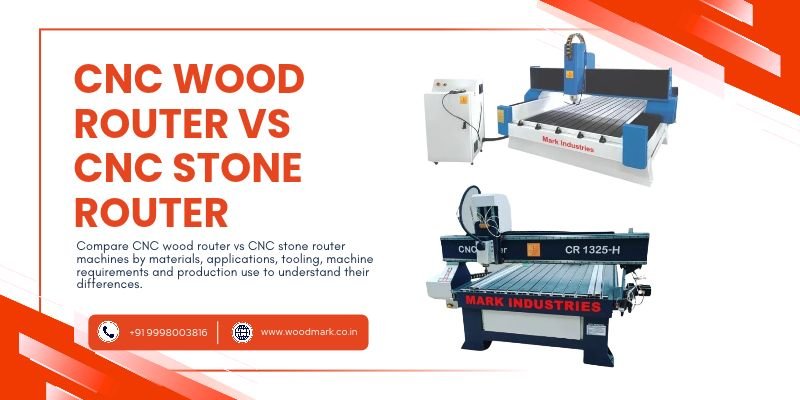
CNC routers are available in different configurations because machining wood-based panels and machining stone are very different production tasks.
This is why manufacturers comparing a CNC wood router vs CNC stone router should look beyond their similar appearance.
The material, tooling, machine configuration, production environment and intended application all influence which CNC solution is appropriate.
What Is a CNC Wood Router?

A CNC wood router is designed for suitable woodworking and furniture-production applications.
Depending on its configuration and tooling, it can be used for operations involving materials such as MDF, plywood and other suitable wood-based panels.
Typical applications include:
- Furniture components
- MDF cutting
- Decorative routing
- Cabinet parts
- Door and shutter designs
- Grooving
- Interior panels
- Custom woodworking components
For furniture manufacturers, CNC routing can help convert digital designs into repeatable machined components.
What Is a CNC Stone Router?

A CNC stone router is configured for suitable machining operations involving stone materials.
Depending on the specific machine, tooling and material, applications can include cutting, engraving, profiling or other CNC-controlled stone machining operations.
Stone processing introduces different requirements from woodworking because of the characteristics of the material and the machining environment.
CNC Wood Router vs CNC Stone Router
| Factor | CNC Wood Router | CNC Stone Router |
|---|---|---|
| Primary application | Woodworking and furniture | Stone processing |
| Typical materials | MDF, plywood and suitable wood products | Suitable stone materials |
| Common work | Cutting, routing, grooving | Cutting, profiling, engraving |
| Tooling | Selected for woodworking material | Selected for stone machining |
| Production environment | Wood dust management required | Stone-processing waste management required |
| Machine selection | Based on furniture/component requirements | Based on stone and machining requirements |
Actual capabilities depend on the individual machine configuration.
1. Material Is the Biggest Difference
The first question should be simple:
What material are you going to machine?
Wood-based boards and stone behave very differently during machining.
As a result, tooling, machining parameters, machine construction and supporting systems should be appropriate for the intended material.
A buyer should never assume that two CNC routers with similar working dimensions are designed for identical applications.
2. Tooling Requirements Differ
Cutting tools are selected according to the material and machining operation.
A tool suitable for routing MDF should not automatically be considered appropriate for stone processing.
- When discussing a CNC machine with the manufacturer, provide:
- Material type
- Material thickness
- Required operation
- Component dimensions
- Required profile or design
- Expected production volume
This helps determine an appropriate machine and tooling configuration.
3. Production Environments Are Different
Material removal also affects the factory environment.
Woodworking operations can generate substantial dust and chips, making suitable dust management an important consideration.
Stone machining has its own waste-management and processing requirements depending on the machine and operation.
Factory infrastructure should therefore be considered when selecting either type of CNC equipment.
4. Applications Are Different
Choose the machine based on the finished product rather than the phrase “CNC router.”
For example, a furniture manufacturer producing MDF cabinet components has fundamentally different requirements from a business machining stone components.
The correct machine starts with:
Material → Product → Operation → Dimensions → Production requirement
This sequence makes machinery selection much clearer.
Can One CNC Router Be Used for Everything?
A CNC machine should not be selected on the assumption that it can efficiently process every material.
Machines are configured around intended applications.
Before considering cross-material use, manufacturers should discuss the exact material and operation with the machinery and tooling suppliers.
In many production environments, purpose-appropriate machinery provides a clearer and more manageable manufacturing setup.
Questions to Ask Before Buying
Before requesting a CNC router quotation, prepare answers to these questions:
- Which material will be machined?
- What is the maximum material size?
- What material thickness is commonly used?
- Which operations are required?
- What products will be manufactured?
- What production volume is expected?
- What tooling will be required?
- What factory infrastructure is available?
These details allow a machinery manufacturer to discuss a configuration based on the application rather than simply quoting a generic CNC machine.
FAQs
What is the main difference between a wood router and stone router?
Can a CNC wood router machine stone?
Which machine should I choose for stone machining?
Which CNC router is suitable for MDF furniture?
Conclusion
When comparing a CNC wood router vs CNC stone router, the most important difference is not simply machine size or CNC control. It is the manufacturing application each machine is configured to handle.
Wood routers serve woodworking and furniture-production requirements, while stone routers address suitable stone-machining applications.
Before selecting either machine, define your material, finished product, machining operations, dimensions and expected production volume. These details provide a much stronger basis for choosing CNC equipment than comparing price alone.