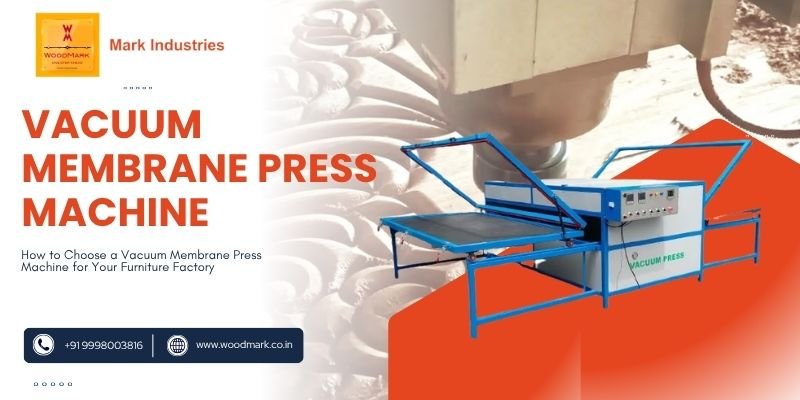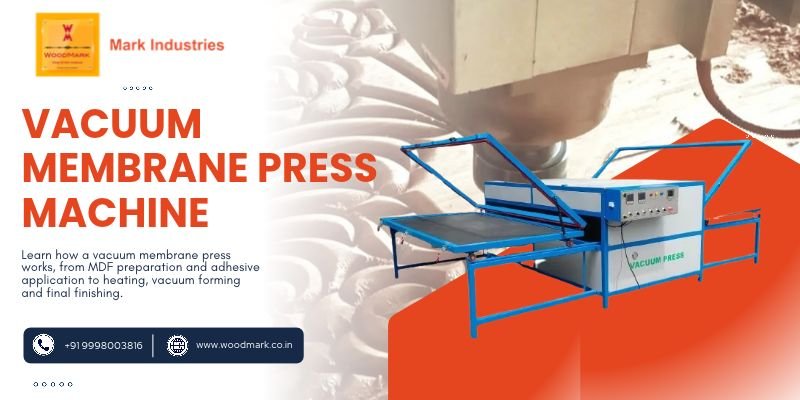
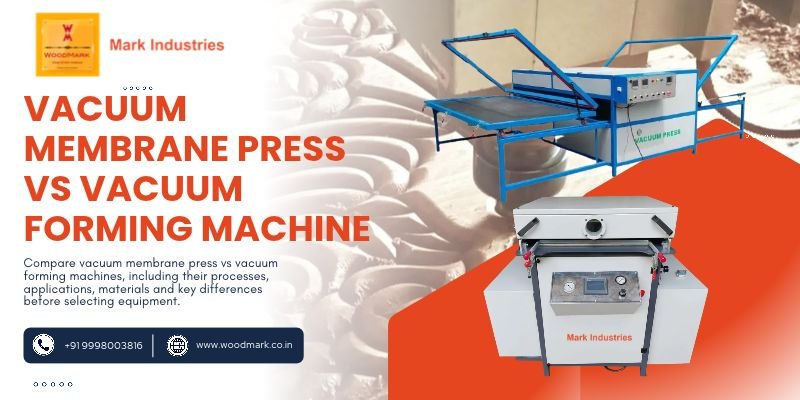
Vacuum membrane pressing and vacuum forming may sound similar because both processes involve vacuum. However, their production objectives, materials and applications can be different.
Understanding vacuum membrane press vs vacuum forming machine applications is important before investing in equipment.
Here are the major differences manufacturers should consider.
What Is a Vacuum Membrane Press?
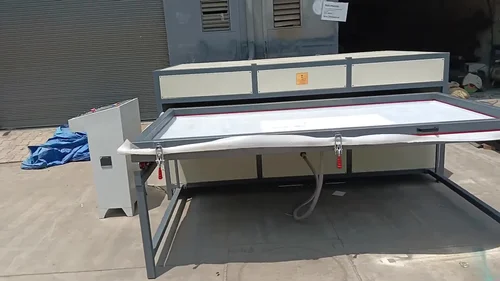
A vacuum membrane press is commonly associated with applying suitable decorative membrane over shaped or routed components.
In furniture manufacturing, applications can include:
- Kitchen shutters
- Wardrobe doors
- Routed MDF doors
- Cabinet fronts
- Decorative MDF panels
- Interior furniture components
Heat and vacuum are used as part of the process to help the membrane conform around suitable profiles and surfaces.
What Is a Vacuum Forming Machine?
Vacuum forming is a manufacturing process in which suitable thermoplastic sheet material is heated and formed over or into a mould using vacuum.
Depending on the equipment and tooling, vacuum forming can be used for various shaped plastic components.
The required machine configuration depends heavily on the material, sheet dimensions, component geometry and intended application.
Vacuum Membrane Press vs Vacuum Forming Machine
Here is a simplified comparison:
| Factor | Vacuum Membrane Press | Vacuum Forming Machine |
|---|---|---|
| Main purpose | Applying membrane over components | Forming plastic sheet into a shape |
| Typical base | MDF/furniture component | Mould or tooling |
| Common material | Decorative membrane | Suitable thermoplastic sheet |
| Typical output | Finished/covered component | Formed plastic component |
| Common application | Furniture surfaces | Shaped plastic products |
| Vacuum role | Helps membrane conform to component | Helps heated sheet conform to mould |
Difference in the Starting Material
Difference in the Finished Product
A membrane press generally retains the underlying furniture component as part of the final product.
For example:
Routed MDF component + adhesive + decorative membrane → membrane-finished furniture component
Vacuum forming instead creates a formed plastic shape from sheet material using tooling.
This distinction is important when deciding which process belongs in your production line.
Which Machine Should You Consider?
Questions to Ask Before Selecting Equipment
Before requesting a quotation, define:
- What product will you manufacture?
- What material will be processed?
- What are the maximum component dimensions?
- Do you need to cover an existing component or form a plastic sheet?
- What is your expected production volume?
- What tooling is required?
- What factory space is available?
- What electrical and supporting requirements apply?
These details help machinery manufacturers understand the intended application.
Can the Two Machines Replace Each Other?
FAQs
Is vacuum membrane pressing the same as vacuum forming?
Which process is used for MDF kitchen shutters?
Does a vacuum forming machine require a mould?
Which machine should I buy?
The appropriate machine depends on the material, finished product, dimensions, production volume and manufacturing process. These requirements should be defined before comparing machine configurations.
Conclusion
The main difference between a vacuum membrane press and vacuum forming machine is what each process is designed to accomplish.
A membrane press is commonly used to apply decorative membrane over suitable existing components such as routed MDF furniture parts. Vacuum forming generally uses heated thermoplastic sheet and tooling to create a formed plastic component.
Rather than choosing based on machine terminology alone, manufacturers should start with their finished product, material, dimensions and production requirements.
Woodmark provides machinery for different manufacturing applications, allowing buyers to evaluate equipment according to the process their products actually require.