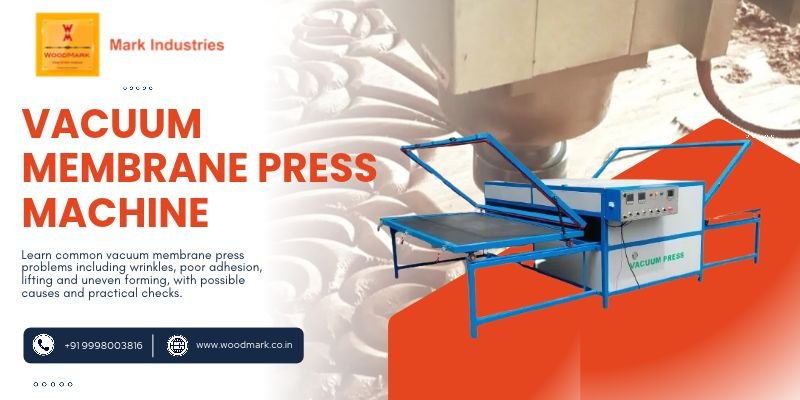
Vacuum membrane pressing involves several variables working together, including component preparation, adhesive, heat, vacuum and membrane characteristics.
When one part of the process is unsuitable, defects may appear on the finished furniture component.
Understanding common vacuum membrane press problems can help manufacturers identify which areas of the process should be checked before making adjustments.
1. Membrane Wrinkles
Wrinkles can appear when the membrane does not form smoothly around the component.
Possible factors may include:
- Unsuitable heating conditions
- Component positioning
- Insufficient spacing between parts
- Complex component profiles
- Membrane characteristics
- Process settings
If wrinkles repeatedly appear in the same location, examine both the component geometry and the loading arrangement.
2. Poor Adhesion
Poor bonding between the membrane and MDF surface can result in lifting or separation.
Areas worth checking include:
- Surface preparation
- Dust or contamination
- Adhesive application
- Adhesive compatibility
- Recommended activation conditions
- Processing parameters
The adhesive supplier’s recommended application and processing instructions should be followed.
3. Membrane Lifting Around Edges
4. Poor Forming in Deep Grooves
5. Uneven Surface Appearance
An inconsistent finished surface can have several possible causes.
Check for:
- Dust on the component
- MDF surface imperfections
- Uneven adhesive application
- Membrane contamination
- Inconsistent processing conditions
- Component preparation issues
A clean and repeatable preparation process is important because membrane pressing will not necessarily hide defects underneath the decorative surface.
6. Membrane Tearing
7. Inconsistent Results Between Production Cycles
One batch looks good. The next suddenly decides to develop its own personality. 
When results vary between cycles, check whether the production process itself is consistent.
Compare:
- Material batch
- Component preparation
- Adhesive application
- Loading arrangement
- Machine settings
- Operator procedure
Recording production parameters can make recurring problems easier to identify.
A Simple Troubleshooting Approach
Avoid changing several parameters simultaneously.
Instead, identify the defect and examine the process systematically:
Component → Surface preparation → Adhesive → Membrane → Heating → Vacuum → Loading → Finished result
Changing one relevant variable at a time makes it easier to understand what is influencing the result.
Quick Troubleshooting Table
| Problem | Areas to Check |
|---|---|
| Wrinkles | Heating, layout, membrane, profile |
| Poor adhesion | Surface, adhesive, processing conditions |
| Edge lifting | Edge preparation, adhesive, process |
| Poor groove forming | Profile, membrane, heat, vacuum |
| Uneven surface | Cleaning, MDF preparation, adhesive |
| Membrane tearing | Profile, material, processing conditions |
| Inconsistent batches | Materials, settings, operator process |
How Can Manufacturers Reduce Membrane Pressing Problems?
A standardized production process can help improve consistency.
Manufacturers can document important information for each regularly produced component, including material type, adhesive system, loading arrangement and validated machine settings.
Preventive machine maintenance is also important. Vacuum components, heating systems and other machine elements should be inspected and maintained according to the manufacturer’s recommendations.
FAQs
Why does PVC membrane lift from MDF?
Why do wrinkles occur during membrane pressing?
Why does membrane pressing fail in deep grooves?
Conclusion
Common vacuum membrane press problems such as wrinkles, poor adhesion, edge lifting and uneven forming usually require a systematic review of the complete production process.
Instead of immediately changing machine settings, check the component, surface preparation, adhesive, membrane, loading arrangement, heating and vacuum conditions.
A consistent production process, suitable materials and properly maintained woodworking machinery can help manufacturers achieve more repeatable membrane pressing results.